2025
Motorsports Technology
Product & Systems Design
Background
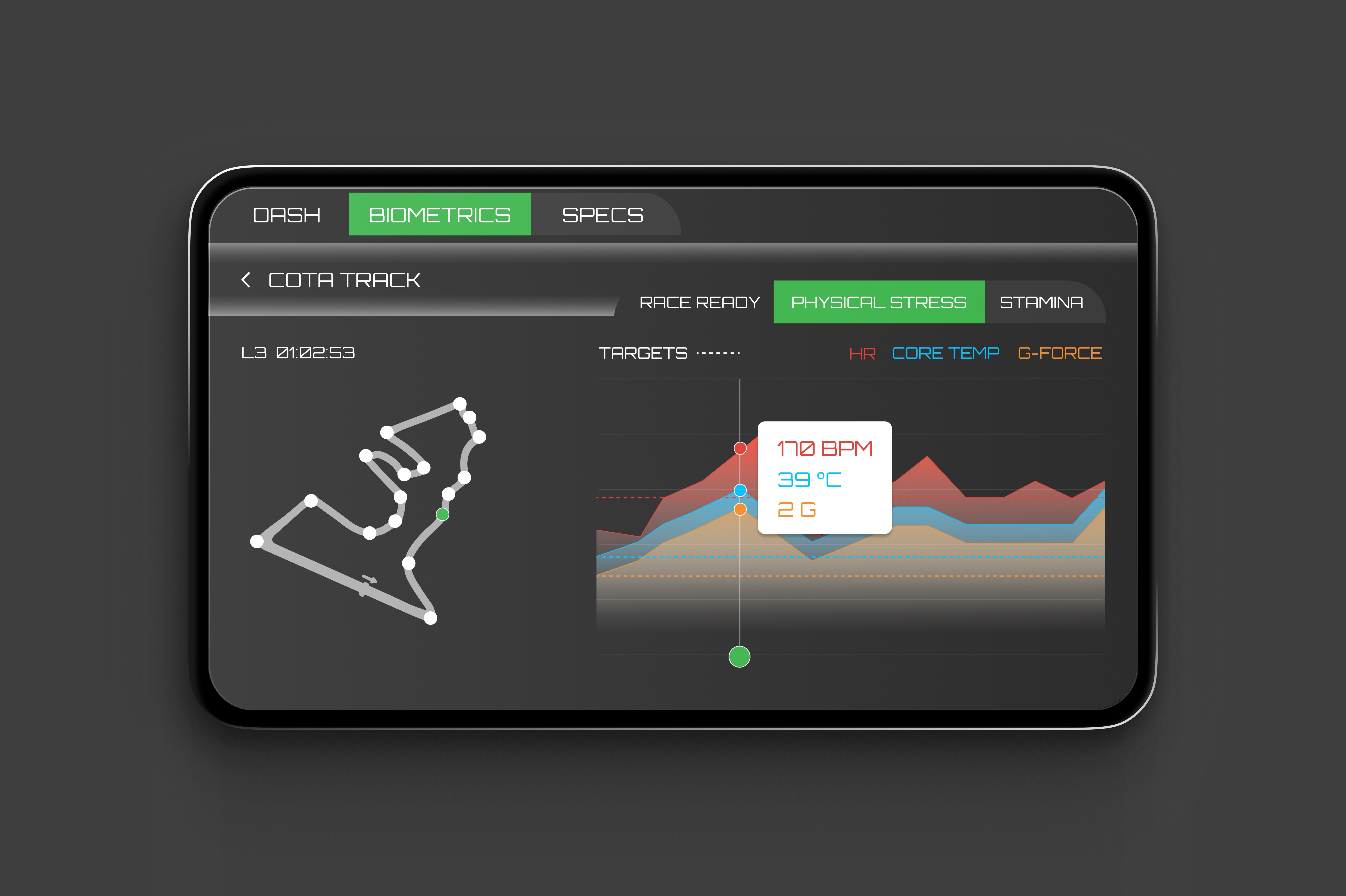
Apex is a biometric performance dashboard designed for amateur racers. By connecting wearable health data with lap timing and telemetry, the system translates physical strain into competitive insight — before, during, and after each session.
Core problem
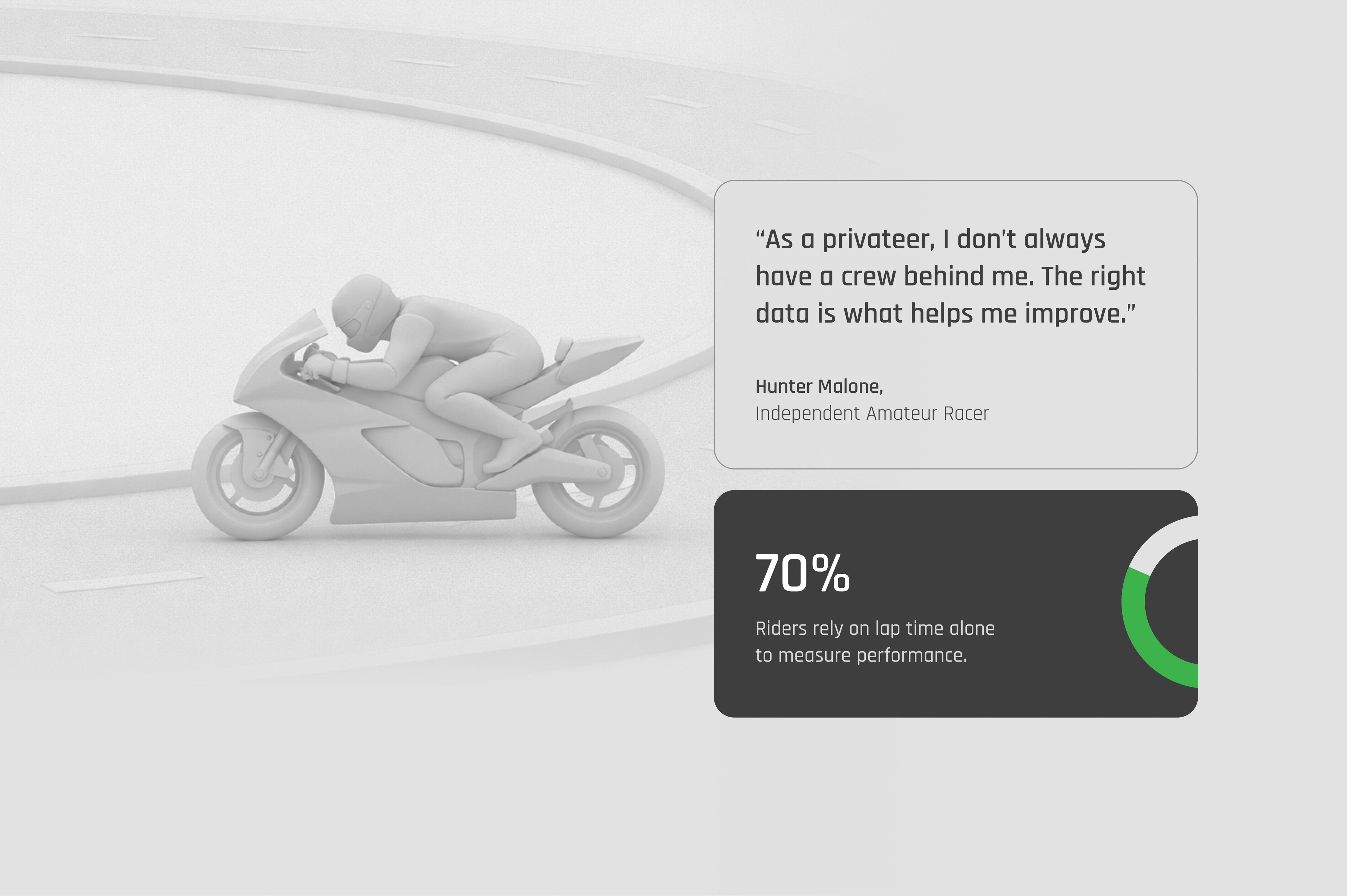
Amateur racers rely heavily on lap times to measure improvement, but lack visibility into the physical factors influencing performance. Fatigue, stress, hydration, and recovery all impact consistency — yet these signals remain disconnected from race data.
The Rider & Research
The primary user is a competitive, self-driven rider who trains independently and races regionally. Without professional coaching or fully integrated performance systems, they depend on instinct and isolated metrics.
Research included in-depth rider interviews, competitive analysis of telemetry platforms, and behavioral studies around performance tracking.
Key findings
Riders focus heavily on lap time as the primary success metric
Biometric data feels disconnected from performance context
Real-time displays must be glanceable and distraction-free
Post-session analysis drives the most meaningful improvement
Connecting the Body to the Machine
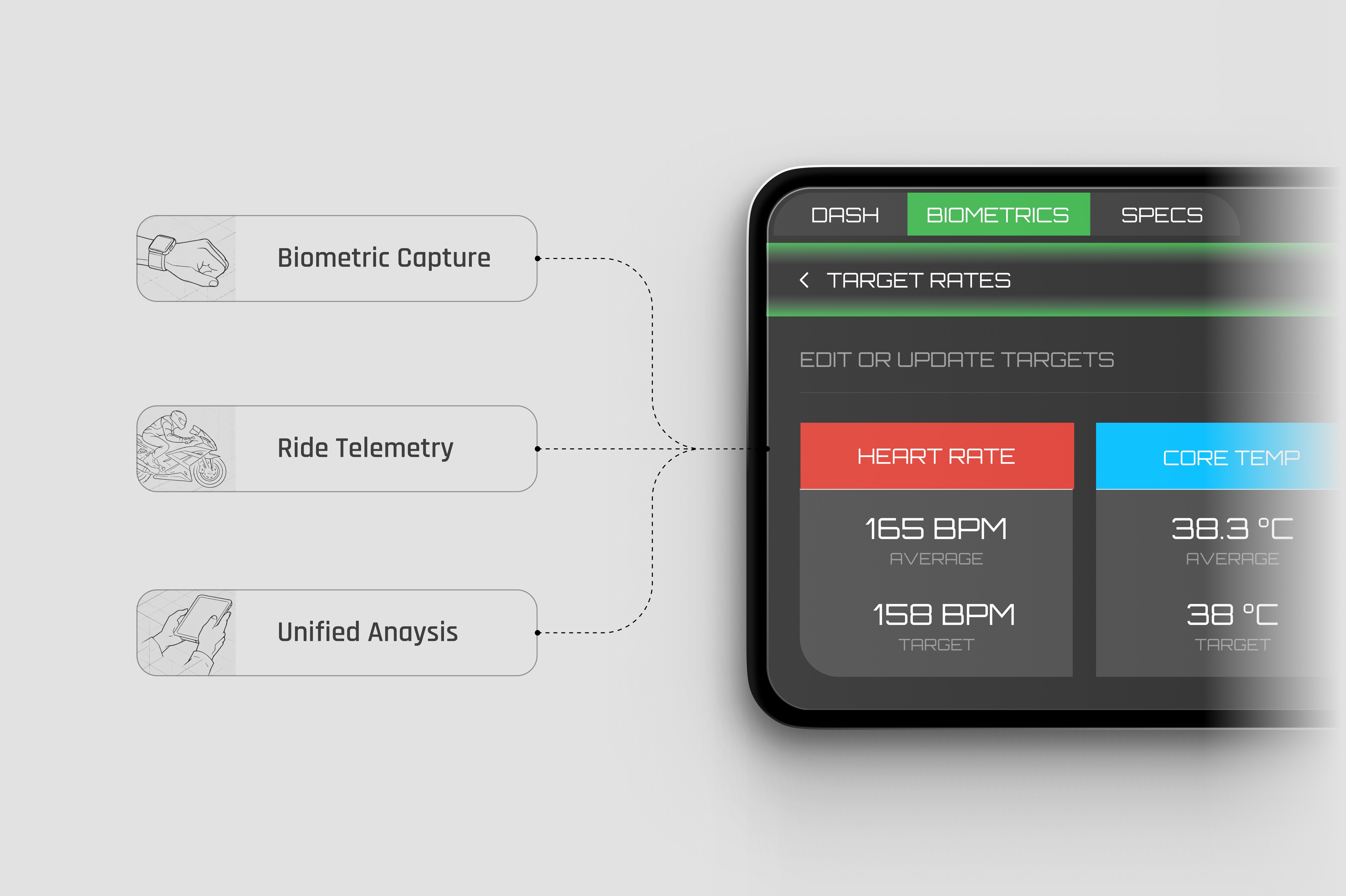
Apex connects wearable biometrics and on-bike telemetry into a unified performance system. Data is captured on and off the track, processed in real time, and translated into clear performance and recovery insights.
Biometric Capture: Heart rate, HRV, and recovery metrics tracked continuously — during sessions and between them.
Ride Telemetry: Speed, lean angle, throttle input, braking force, and lap timing recorded on track to measure performance with precision.
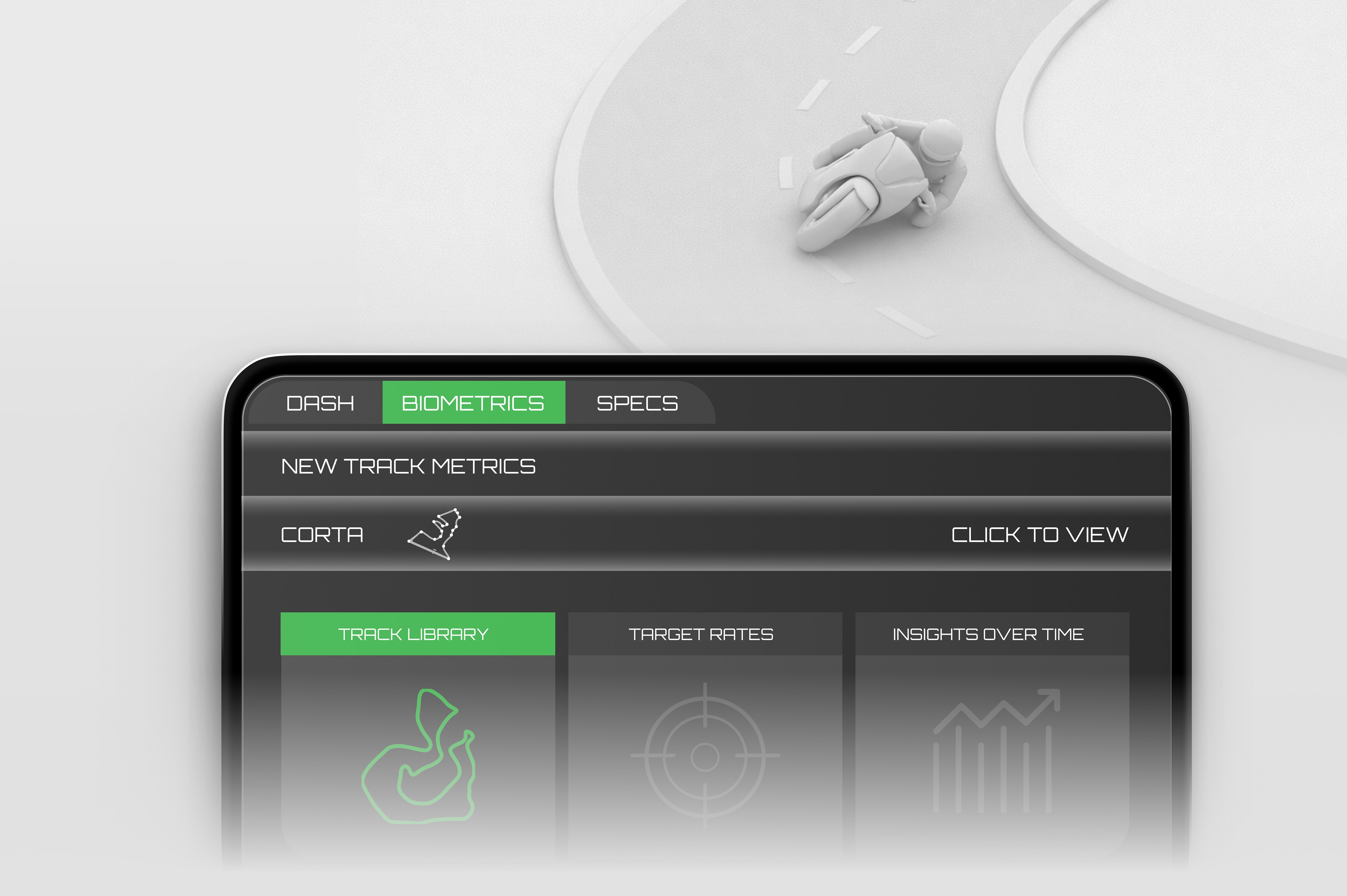
Unified Analysis: Biometric and ride data combined in one mobile interface, enabling performance review and recovery tracking alongside race results.
Process
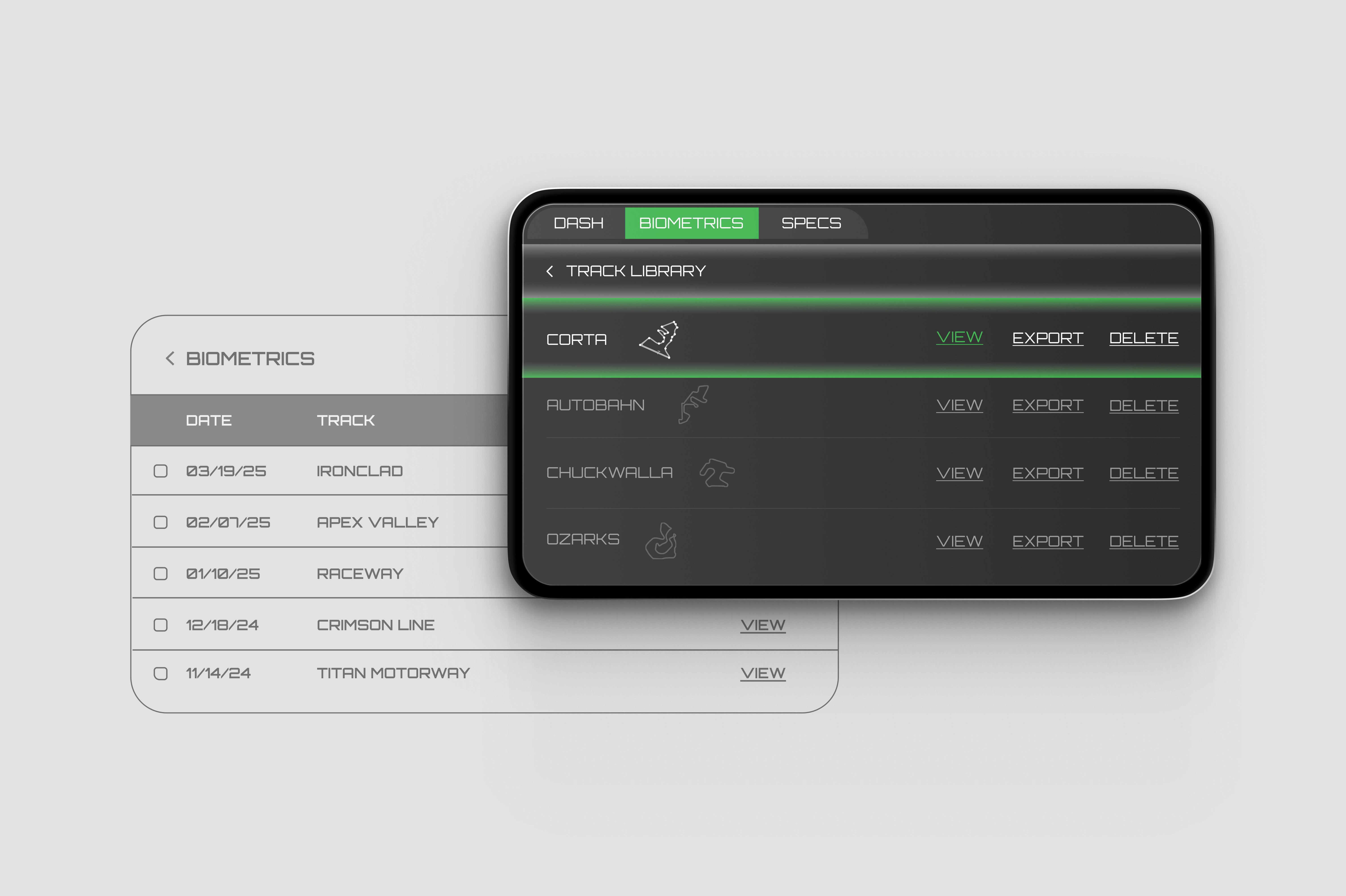
Began in light mode to define structure. Evolved into a darker, race-ready system using color intentionally — guiding attention without overwhelming the rider.
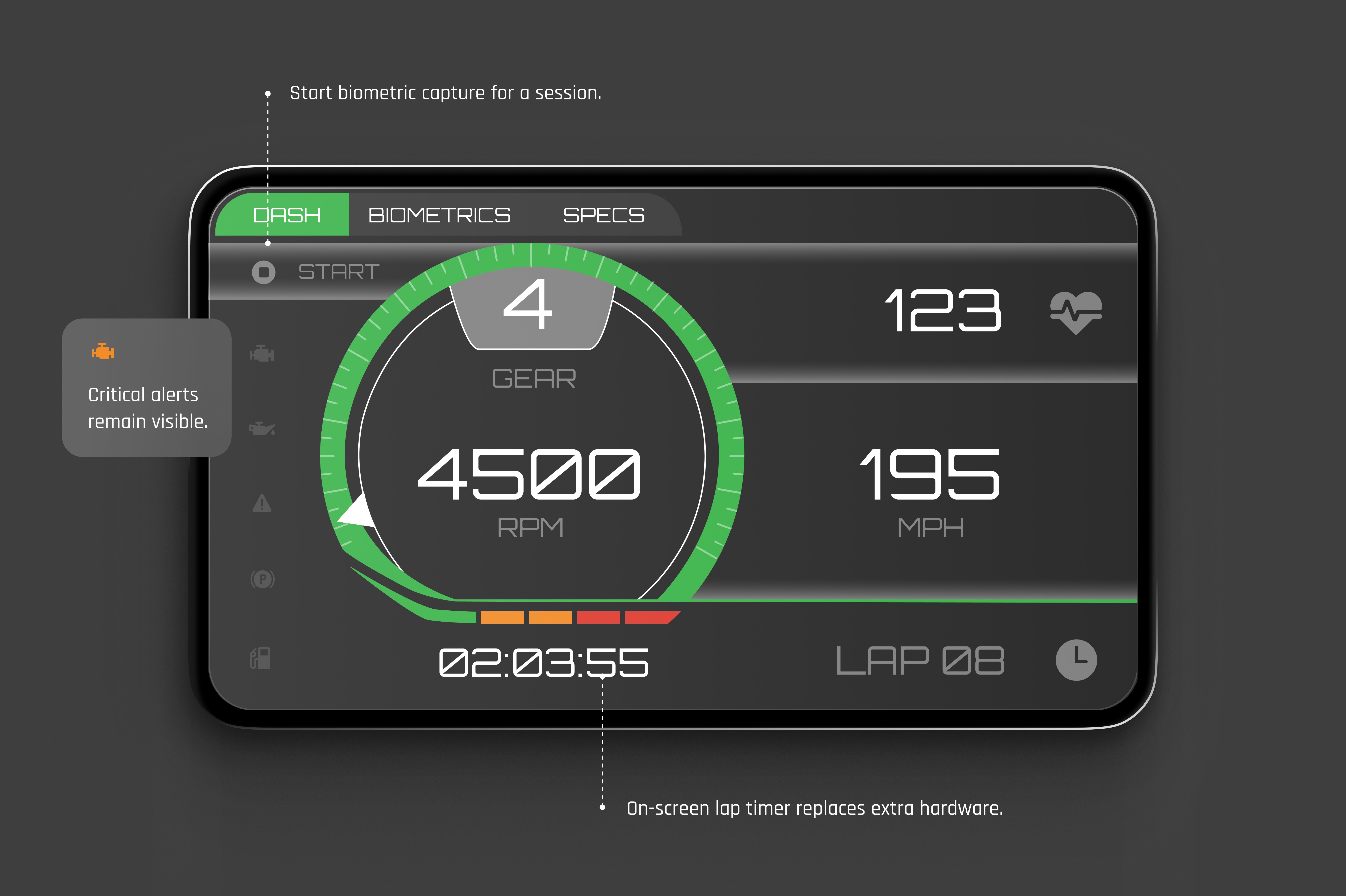
The Race Interface
Designed for high-speed conditions, the race interface prioritizes hierarchy and glanceability. Only essential performance signals surface during active sessions, allowing riders to interpret data without distraction.
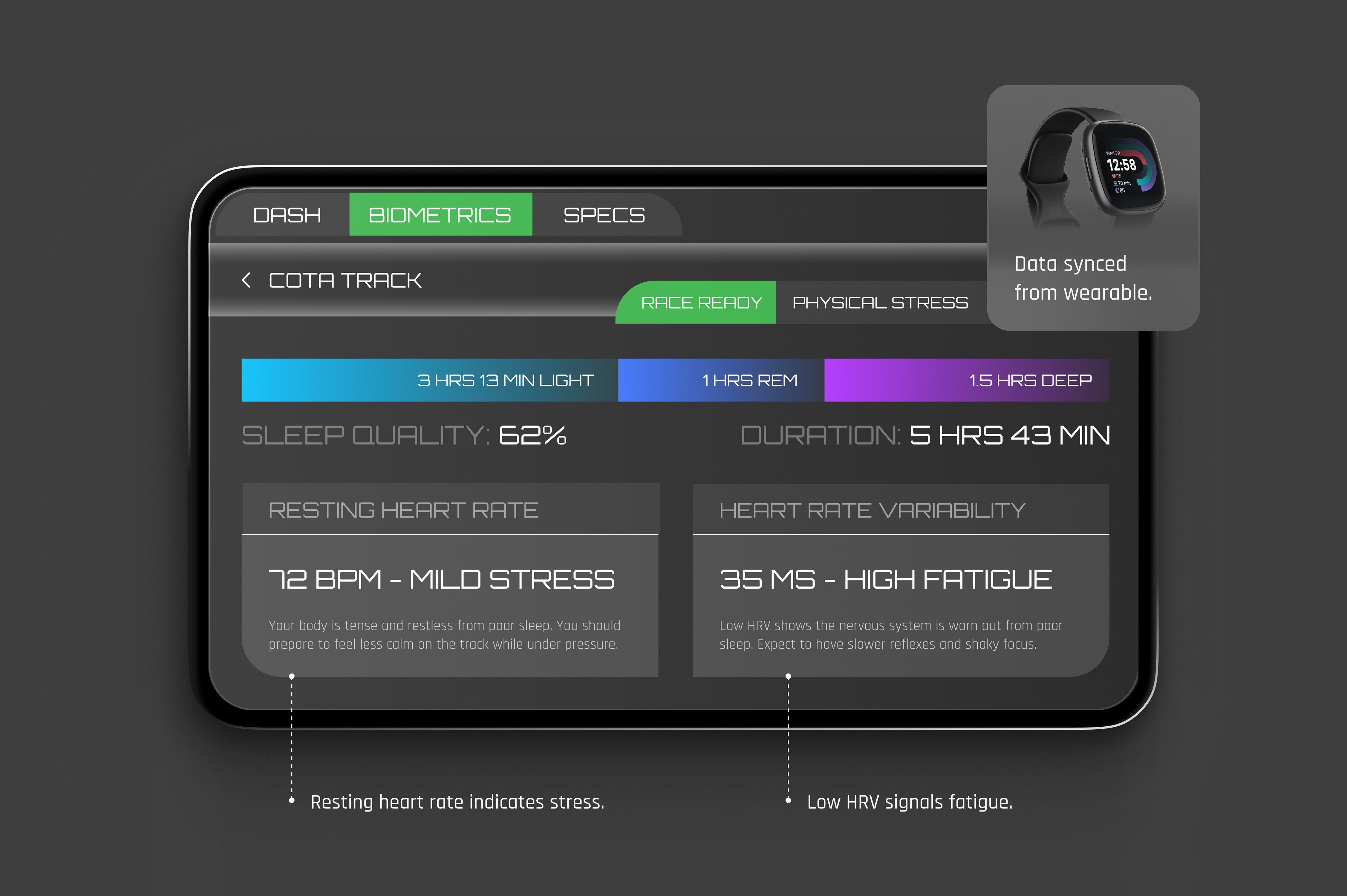
Race Readiness
Race readiness evaluates baseline condition before entering the track. Sleep quality and duration establish recovery levels, while resting heart rate and heart rate variability indicate fatigue and physiological strain. Together, these signals determine performance capacity prior to the session.
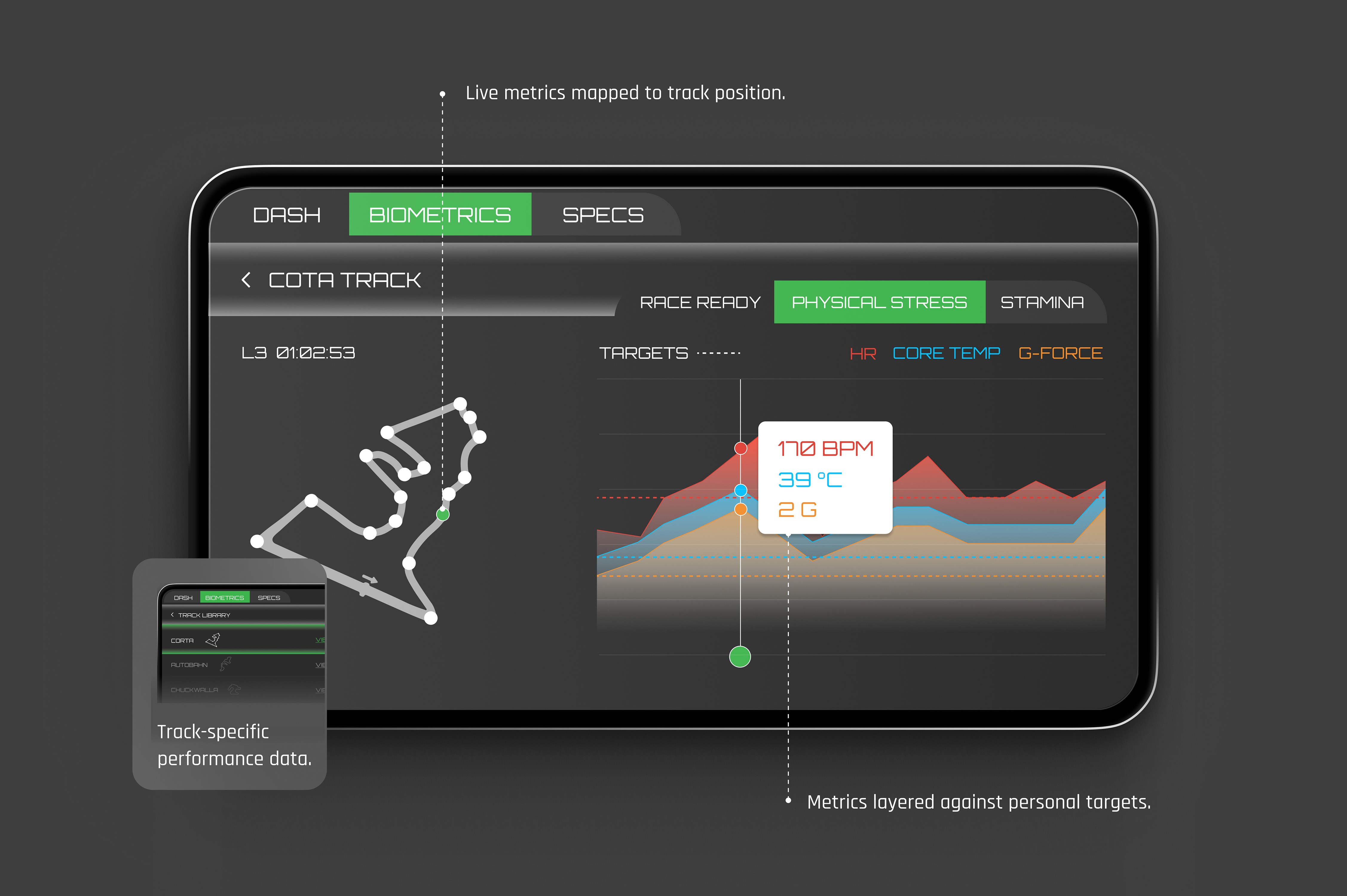
Physical Stress
Physical Stress captures how the body responds under race conditions. Live heart rate, core temperature, and G-force load reflect real-time exertion, while lap times and segment splits provide performance context. This layer connects biometric effort directly to on-track output.
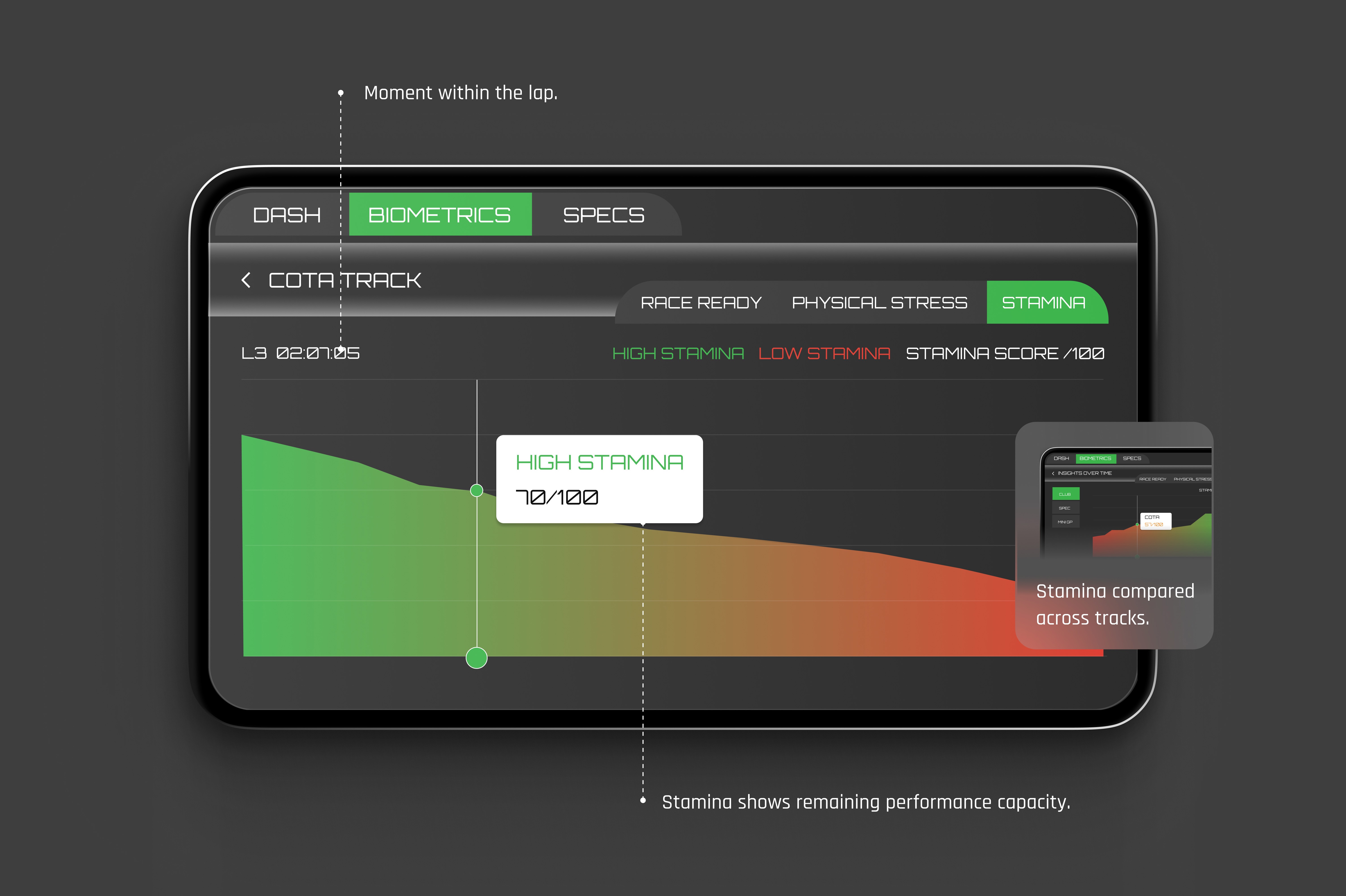
Stamina
Stamina measures how performance sustains over time. A stamina score, session duration, and lap consistency reveal endurance trends across the race. Rather than isolated metrics, riders see how sustained output influences overall results.
Reflection
Designing Apex required simplifying high-volume biometric inputs into structured race signals. Prioritizing clarity at speed meant removing non-essential data and focusing on context — ensuring the system supported both performance improvement and rider safety.
This project strengthened my abilities in design data-driven systems, under physical and environmental constraints. Rider interviews played a critical role throughout the process, grounding technical decisions in real-world training behaviors and needs.